Leverhulme-Peierls Fellows
07 February 2026
Registration is now closed for this event. Please keep an eye on this page for recordings of the talks.
Please join us at the next Saturday Morning of Theoretical Physics this upcoming Hilary Term on 7 February 2026.
Talks begin at 10.30am, with registration and arrivals open from 10am.
The Leverhulme-Peierls Fellowship programme at the Rudolph Peierls Centre for Theoretical Physics brings the most talented early-career theoretical physicists worldwide to Oxford for a prestigious three-year position in which they enjoy the intellectual freedom to pursue a research agenda of their own choosing.
On 7 February, please join our newest cohort of Fellows as they deliver lectures from the cutting-edge of their fields.
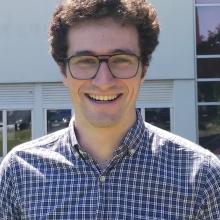
'Extreme Plasma Physics: radiation and collective dynamics' (Dr Pablo Bilbao)
Plasmas in ultra-strong electromagnetic fields behave in fundamentally new ways. When particles reach relativistic energies, radiation losses and quantum electrodynamical (QED) processes such as high-energy photon emission and electron-positron pair production become important, going beyond the classical description of plasma physics. These extreme conditions are found in energetic astrophysical environments like neutron stars and gamma-ray bursts and are now becoming accessible in laboratory experiments. In this talk, I will introduce the physics of extreme plasmas and discuss how radiative and quantum effects modify collective plasma behaviour, instabilities, and nonlinear dynamics. Using theoretical ideas and numerical simulations, I will illustrate how microscopic radiation and quantum processes can influence macroscopic plasma properties in both astrophysical and laboratory settings.

'Physics and Information: why does it cost to process information, and how much does one have to pay?' (Dr Roi Holtzman)
Thermodynamics distinguishes work and heat as two modes of energy transfer. But what makes them different, and why does that difference matter? Maxwell's demon sharpened the puzzle by suggesting that information about a system could be used to extract work, seemingly violating the second law. The modern resolution is that information is a physical resource: processing, and particularly erasing information, carries unavoidable thermodynamic costs. In this talk, I will survey the relationship between information and physics from several perspectives, and highlight how it underpins the emerging field known as the physics of computation.
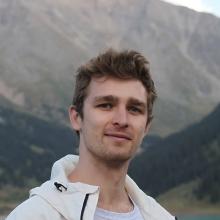
'Some Like it Hot: how controlling plasma turbulence could realise fusion energy dreams' (Dr Richard Nies)
To produce fusion energy requires very high temperatures, ten times larger than that of our Sun. Frustratingly, efforts to reach such temperatures are impeded by the large heat losses due to turbulent mixing. It is therefore crucial to study plasma turbulence, and ultimately to find ways to control it. In this talk, I will provide an overview of fusion energy efforts and I will present results from my research on turbulence in magnetically confined fusion plasmas.